

Larry Collmus © Benoit Photo
Larry Collmus has done and seen a lot of things in horse racing. So, when something comes along that Larry hasn’t done yet, it’s worth noting. Last Sunday he got to call a race with a horse in it that was named after him. Collmus, the horse, went off the 4/5 favorite in the field of five maidens. He finished fourth.
To hear Collmus tell the story, he was approached by owner Amr Zedan one day. The Saudi Arabian businessman was wondering why Santa Anita announcer, Frank Mirahmadi, had a horse named after him, but Larry didn’t. So, Zedan arranged for his trainer, Bob Baffert, to cull three horses from his herd and Collmus chose the one to be named after him.
Unfortunately, the 5-year-old son of Gun Runner has been dealing with a series of injuries over the years and last Sunday was his racing debut.
“It was fun calling a horse named after me,” Collmus said after the race. “Wish we had run better.”
Collmus is into his third summer calling the races at Del Mar. His first was the year of Covid when Del Mar track announcer Trevor Denman chose to stay home in Minnesota. Collmus would return to call the races in the fall of that year and has done so every year since.
“I’ve learned some short cuts,” Collmus jokes. “I’m getting around alright.”
It’s a well know fact that Collmus has some side jobs during the months that Del Mar is not running. He calls the Kentucky Derby for NBC as well as the other two legs of the Triple Crown. He’s also the voice of the Breeders’ Cup. It’s afforded him the opportunity to be apart of some very significant days and events in horse racing, but none bigger than the one in 2015.
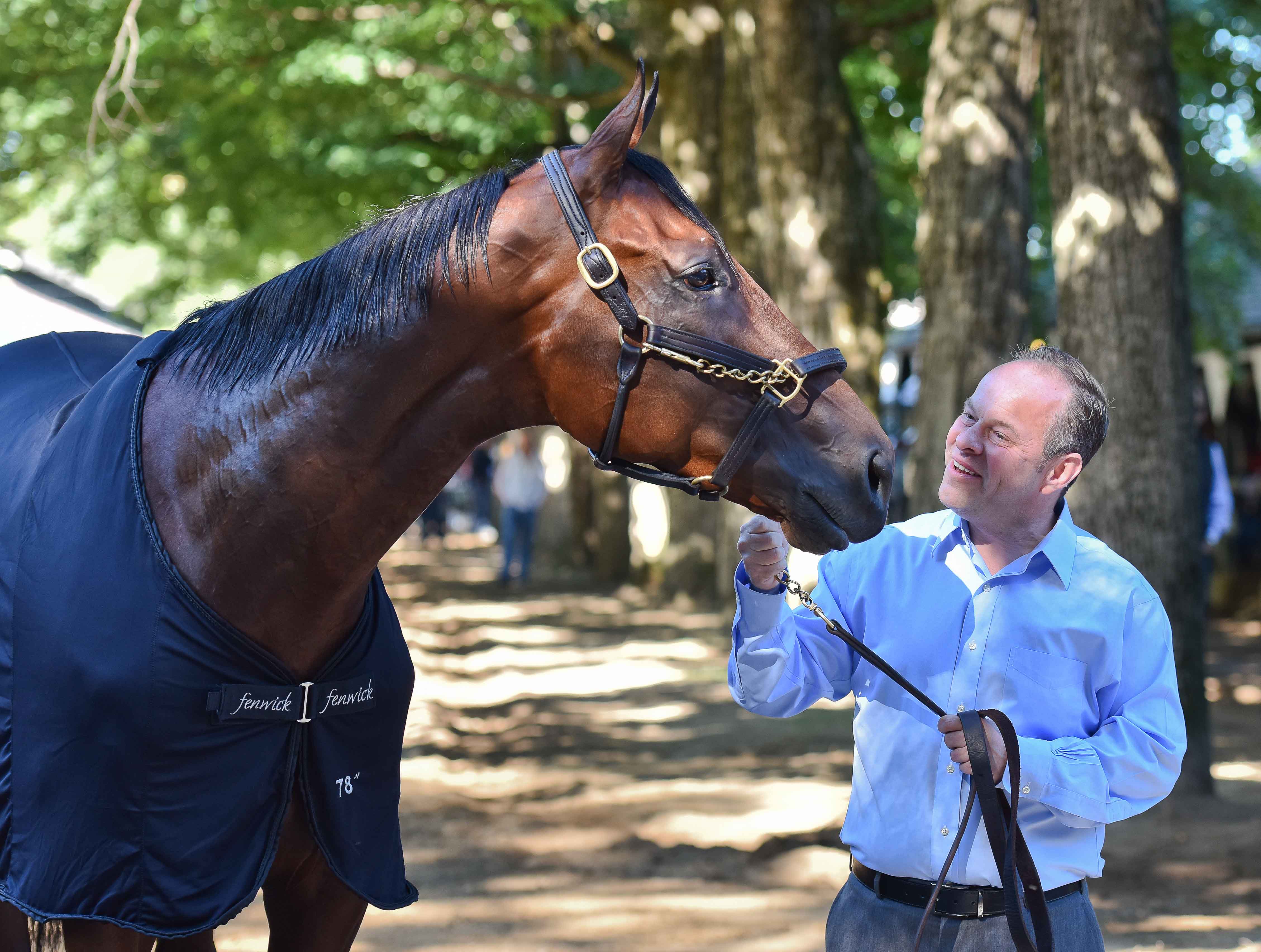
Larry Collmus and American Pharoah © Mike Kane
“It’s not even close,” Collmus says when asked what his biggest moment in racing has been. “It’s American Pharoah winning the Triple Crown. To be a part of that and be the guy that got to narrate it was pretty special. It was kind of an out-of-body experience.”
Collmus says there were signs leading up to the race that convinced him this might be the day the Triple Crown drought of 37 years would be broken.
“The night before I went out to dinner with Tom Hammond and Donna Brothers,” Collmus states, “and Penny Chenery came over and hung out with us for a little while. I just got this feeling, ‘I’m with the owner of Secretariat, this is going to happen.’”
Premonition aside, Collmus says the priority that day was simple.
“Just don’t screw it up,” he said he told himself before the race. “Get it right and it worked out fine.”
It became one of the greatest race calls of all time.
Whether it’s the Kentucky Derby or a Thursday of racing at Del Mar, Collmus puts in a good amount of preparation for the races.
“I color in the silks,” Collmus says as he looks over his program sheet, “so I have an idea of what they’re going to look like when they come out onto the track and that kind of helps me. I’ll look at the PP’s to see what the horses have done. What the speed might be. Who the closers might be. On an eight-race card during the week it’s going to take me about an hour (to prepare), the weekend card an hour and a half.”
It’s a job that abuses your short-term memory.
“It’s like taking a test every half hour,” Collmus states. “You get the names in your head and then you have to forget them. You don’t want to have a horse you called with similar silks in the next race and call them again. So, you have to wipe the slate clean. I need to forget what I just learned.”
He says the years of experience have taught his brain to do what needs to be done. It’s not a technique or something Collmus conscientiously does after every race.
“Everybody’s got a bet on every race and everybody owns a horse in every race so you want to put on the best call that you can. When three horses are across the track and they’re bobbing heads, even if it is a lower-class race, it’s still exciting. It’s hard not to get fired up over.”
You can sit-in on one of Larry’s patented race calls. Actually, go up to the booth on the roof of the Del Mar grandstand and watch Collmus do his thing. All the while you’ll be contributing to a great cause, Carma, the California Retirement Management Account, which helps find homes for retired racehorses.
A $200 donation gets you a front row seat for one of Collmus’ race calls.
“I meet them out on the roof and we take pictures and chat for a while,” Collmus explains. “I’ll bring them into the booth and show them how I get prepared to call a race. Then they watch me call the race.”
It’s a great behind-the-scenes experience.
“In three ways it’s good,” Collmus notes. “People get to see how it works up there. I get to meet people I would have necessarily never met and CARMA gets the proceeds.”
If you’d like to participate, purchase tickets on DMTC.com/tickets.